That sinking feeling when you realise you’ve got a flat tyre is something most drivers experience eventually. Whether it’s a slow leak discovered in your driveway or a sudden blowout on the motorway, knowing what to do makes the situation far less stressful and keeps you safe.
Your response depends on where you are, what type of puncture you have, and what equipment is available. Let’s walk through the scenarios and your options.
Recognising You Have a Puncture
Slow punctures often announce themselves gradually. The car might pull slightly to one side, steering feels less responsive, or you notice the low tyre pressure warning light on your dashboard. Sometimes you only discover it when you return to your parked car and see a visibly deflated tyre.
Rapid deflation is more dramatic. You’ll hear a loud bang if something large penetrates the tyre or if you hit a pothole hard enough to damage it. The car will immediately pull strongly to one side and handling becomes difficult.
A full blowout at speed is unmistakable. There’s a loud explosion, the steering wheel jerks, and the car becomes very unstable. This is the most dangerous scenario and requires calm, correct reactions to avoid an accident.
What to Do During a High-Speed Blowout
If you suffer a blowout on the motorway or A-road, your immediate reactions are critical. Do not brake hard or make sudden steering movements. Both will likely cause you to lose control.
Grip the steering wheel firmly with both hands and keep it straight. The car will want to pull towards the deflated tyre – you need to resist this gently but firmly.
Take your foot off the accelerator and let the car slow down naturally. Only use the brakes gently once you’ve slowed significantly. Indicate and move gradually towards the hard shoulder or safest available space.
Once you’ve stopped safely away from traffic, turn on your hazard lights, exit the vehicle on the side away from traffic, and get yourself and passengers behind the barrier if possible. Never attempt to change a tyre on a motorway hard shoulder. Call for professional assistance.
Dealing with a Puncture on Regular Roads
For punctures on normal roads, your priority is finding a safe place to stop. Don’t immediately pull over if it means stopping on a blind bend, narrow road, or in a dangerous position.
Drive slowly and carefully to reach a safe, flat location – a car park, wide verge, or quiet side street. A few hundred metres of slow driving on a flat tyre won’t destroy the wheel, but stopping in a dangerous spot could get you hit by another vehicle.
Once stopped safely, turn on your hazard lights. If you’re on a road rather than a car park, use a warning triangle if you have one, placing it at least 45 metres behind your car to warn approaching traffic.
Assessing Whether You Can Change the Tyre Yourself
Before attempting a tyre change, honestly assess whether it’s safe to do so. You need a completely level, solid surface. Attempting to jack a car on soft ground or a slope is dangerous – the jack can sink or slip, and the car could fall.
Consider the weather and visibility. Changing a tyre in heavy rain or darkness is miserable and risky. If traffic is passing close by, even on a minor road, that’s another safety concern.
Check you have all the necessary equipment: a properly inflated spare tyre, a jack that works, a wheel brace, and ideally gloves and a torch. If any of these are missing or faulty, don’t attempt the change.
Be honest about your physical capability too. Wheel nuts can be extremely tight, and jacking and manoeuvring a wheel requires reasonable strength and mobility. There’s no shame in calling for help instead.
How to Change a Tyre Safely
If you’ve decided to change the tyre yourself and it’s safe to do so, follow the correct procedure. First, apply the handbrake firmly and put the car in gear (or Park for automatics). Chock the wheel diagonally opposite to the one you’re changing if possible.
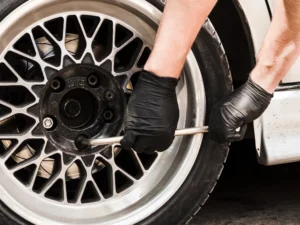
Loosen the wheel nuts slightly before jacking the car up. They’re much easier to undo while the tyre is on the ground. Don’t remove them yet, just break their tightness with the wheel brace.
Position the jack according to your vehicle handbook – there are specific jacking points. Using the wrong location can damage the car or cause the jack to slip. Raise the car until the flat tyre is just clear of the ground.
Remove the wheel nuts completely and keep them safe. Remove the damaged wheel and fit the spare, ensuring it’s the right way around (directional tyres have arrows showing rotation direction).
Replace the wheel nuts and tighten them by hand first. Lower the car until the spare tyre just touches the ground, then tighten the nuts fully in a star pattern (opposite nuts, not adjacent ones) to ensure even tightening.
Lower the car completely and give the nuts a final tightening check. Store the damaged tyre and equipment, and remember to get the flat tyre repaired or replaced as soon as possible.
Using a Space-Saver Spare Tyre
Many modern cars come with space-saver spare tyres rather than full-size spares. These are smaller, lighter, and take up less boot space, but they have important limitations.
Space-savers are typically restricted to 50mph maximum speed and should only be used for short distances to get you home or to a tyre service. They’re marked with these restrictions on the sidewall.
Drive carefully on a space-saver. The car’s handling will feel different because one wheel is smaller. Take corners gently and allow extra braking distance. Don’t use them on motorways if you can avoid it.
Tyre Repair Kits and Inflators
Some cars, particularly newer models, don’t carry spare tyres at all. Instead, they have tyre repair kits containing sealant and a compressor.
These kits work for small punctures in the tread area. You inject the sealant through the valve, then use the compressor to re-inflate the tyre. The sealant plugs the hole temporarily, allowing you to drive to get a proper repair.
Repair kits don’t work for larger punctures, sidewall damage, or if the tyre has completely deflated and damaged the sidewall by driving on it. They’re also messy to use and the tyre will need professional repair or replacement afterwards.
If you’ve used a sealant kit, tell the tyre technician before they start working on the tyre. The sealant makes repairs difficult and they need to know what they’re dealing with.
When to Call for Professional Help
Many situations justify calling a mobile tyre service rather than attempting a roadside change. If you’re in a dangerous location, lack proper equipment, don’t feel capable of changing the tyre, or the weather is terrible, it’s time to make that call.
If you have a blowout on a motorway, professional help isn’t optional – it’s the only safe choice. The hard shoulder is far too dangerous for DIY tyre changes.
Mobile tyre services can reach you quickly, assess the situation, and either repair the puncture on the spot or fit a replacement. They have the right equipment, expertise, and most importantly, they can work safely with proper procedures.
Can Punctures Be Repaired?
Not all punctures require a new tyre. Small punctures in the tread area (the central three-quarters of the tyre), caused by objects up to 6mm diameter, can usually be repaired professionally.
Proper repairs involve removing the tyre from the wheel, inspecting the inside for damage, and fitting a patch and plug combination from the inside. These repairs are permanent and safe if done correctly.
Punctures in the sidewall cannot be safely repaired. The sidewall flexes constantly during driving and any weakness there can lead to catastrophic failure. Similarly, punctures in the shoulder area (between tread and sidewall) are generally not repairable.
If a tyre has been driven on while flat, even for a short distance, the internal structure may be damaged beyond repair. The sidewalls compress and the tyre overheats, potentially causing damage that’s not visible from outside.
Preventing Future Punctures
While you can’t prevent all punctures, you can reduce the risk. Avoid driving over obvious debris in the road. Watch for potholes and rough road edges that can damage tyres. Don’t mount kerbs unless absolutely necessary.
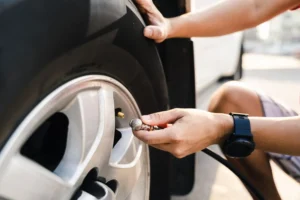
Keep your tyres properly inflated. Under-inflated tyres are more susceptible to punctures and damage. Regular pressure checks catch slow leaks before they become flat tyres.
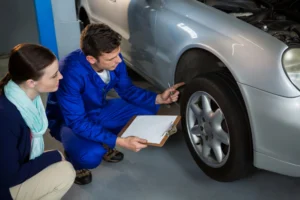
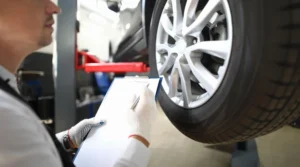
Inspect your tyres regularly for embedded objects. A nail or screw might not cause immediate deflation but will eventually lead to a puncture. Catching these early means you can get a controlled repair rather than dealing with an emergency.
What to Keep in Your Car
Being prepared makes puncture situations less stressful. Keep a warning triangle, high-visibility vest, torch, and gloves in your car. Check your spare tyre pressure every few months – a flat spare is useless when you need it.
Consider carrying a portable tyre inflator. They’re inexpensive and can help with slow punctures or just topping up pressure. Some can run from your car’s 12V socket.
Keep the contact details for a reliable mobile tyre service in your phone. When you’re stranded with a puncture isn’t the time to be searching for help.
Mobile Tyre Services for Puncture Emergencies
When you need help with a puncture, mobile tyre fitting offers the fastest, safest solution. Rather than limping to a garage or risking a dangerous roadside change, help comes to you.
DC Emergency Tyre Fitting provides rapid response for puncture emergencies across Barnsley, Rotherham, Sheffield, Doncaster, and Wakefield. We’ll assess whether repair is possible or fit a replacement on the spot, getting you back on the road quickly and safely.